Open any thread on r/GetStudying, r/productivity or r/ADHD asking for the best study music and you'll get the same five answers inside an hour: lo-fi hip-hop, Brian Eno-style ambient, video game soundtracks, binaural beats, and the catch-all "anything with no words." That consensus isn't wrong. It's just incomplete. It tells you which genre to search for, not why certain tracks inside that genre actually help you concentrate while others, despite sounding almost identical, quietly wreck your attention span forty minutes in.
The Reddit consensus, summarised
Strip out the noise and the recurring recommendations fall into five buckets. Lo-fi hip-hop gets mentioned most, usually because it's free, endless, and associated with the original "lofi girl" livestream that normalised background study music for a whole generation. Ambient instrumental, often Eno, Stars of the Lid, or generic "ambient study" playlists, comes second, praised for having no obvious rhythm to latch onto. Video game and film scores show up constantly too, because composers built them specifically to sit under attention without demanding it. Binaural beats get recommended with real conviction by a smaller, vocal group. And the catch-all answer, repeated in nearly every thread, is simply: no lyrics, no sudden changes, nothing you recognise well enough to sing along to.
Reddit is right that these categories work better than, say, a pop playlist with vocals and big dynamic swings. Where it falls short is explaining the mechanism, which matters because it tells you how to judge a track you've never heard before instead of just trusting a genre label.
Why "no lyrics" is the rule everyone gets half right
The actual issue isn't lyrics themselves, it's language processing competing with the language processing your study task needs. Reading, writing, and most memorisation work pull on your phonological loop, the part of working memory that silently "hears" words as you read them. A vocal track in a language you understand loads that same channel. Two voices fighting for one lane is why a favourite song can derail an essay in a way that instrumental music from the same artist wouldn't.
This is also why the rule has a genuine exception Reddit rarely spells out: vocals in a language you don't speak, or wordless vocal textures like Lisa Gerrard's work or Icelandic post-rock, often cause no interference at all, because there's no language channel being loaded. If a thread tells you "never any vocals, ever," they're overcorrecting. The real test is whether you can understand the words. If you can't, the rule doesn't apply.
The tempo nobody on Reddit talks about
Genre gets discussed endlessly. Tempo almost never does, and it's arguably more important. Music in the 60-70 bpm range, roughly a resting heart rate, tends to sit underneath sustained reading or writing without pulling your attention toward the beat. Faster material, 90-120 bpm with a clearer pulse, works better for repetitive or administrative tasks, the kind where a bit of momentum helps you move through email or data entry. Push much past 120 bpm and most people start unconsciously tracking the rhythm, which is fine for a workout and bad for comprehension.
Be honest about the limits here. There's no solid evidence that a specific tempo makes you smarter, and claims about music raising IQ (the so-called Mozart effect) have been thoroughly debunked. What tempo does seem to influence, based on how composers and sound designers actually use it, is arousal and pacing, how alert or settled you feel while working, not the quality of your thinking itself.
Where the Reddit advice breaks down in practice
Most of these threads point you toward a ten-hour YouTube lo-fi stream, and that's where the real-world problems start. YouTube ads interrupt mid-paragraph. The algorithm occasionally slides from calm lo-fi into something with a drop or a vocal hook, because the platform is optimising for watch time, not your attention span. And if you study somewhere with patchy wifi, a library, a train, a basement office, a streaming playlist is useless the moment the connection drops.
There's also a quieter problem: track fatigue. The same loop for three hours stops being neutral background and starts being a thing you notice, which defeats the purpose. One underused fix, almost never mentioned on Reddit, is layering more than one sound source at low individual volumes rather than relying on one loud track. A little rain, a little room tone, a little instrumental underneath, each barely audible on its own, masks distraction more effectively than a single sound turned up loud enough to be the main event.
That's the idea behind the mixer in My Zen Zone: three or four layers, each with its own level, so you can build a background that's full enough to mask a noisy room but quiet enough to stay out of the way. It's also downloadable for offline use, which solves the library-wifi problem outright.
What to actually try tonight
Skip the hour of browsing playlists and run a small, honest test instead. Pick one task you need to finish, set a 25-minute timer, and play one instrumental track somewhere in the 60-70 bpm range with no vocals you can understand. Count how many times your attention drifts to the music itself rather than the work. Then repeat with a second track, something faster or with more obvious melody. Most people notice a real difference within two sessions, and it's rarely the genre Reddit told them to pick, it's the specific track's density and tempo.
If you want a shortcut rather than trial and error, this breakdown of focus music goes further into what separates tracks that hold attention from ones that hijack it.
Matching the music to the kind of work
Not all study is the same task wearing different clothes, and Reddit threads tend to treat it as one problem with one answer. Deep reading or writing something original wants the quietest, least eventful music you can tolerate, close to no melody at all, because any hook competes with your own internal sentence-forming. Rote memorisation, flashcards, vocabulary, formulas, tolerates slightly more rhythmic material, since the task doesn't rely on language processing in the same way. Repetitive admin work, formatting, filing, data entry, is where the faster, more rhythmic end of the spectrum actually helps rather than hinders, because there's no competing internal monologue to protect.
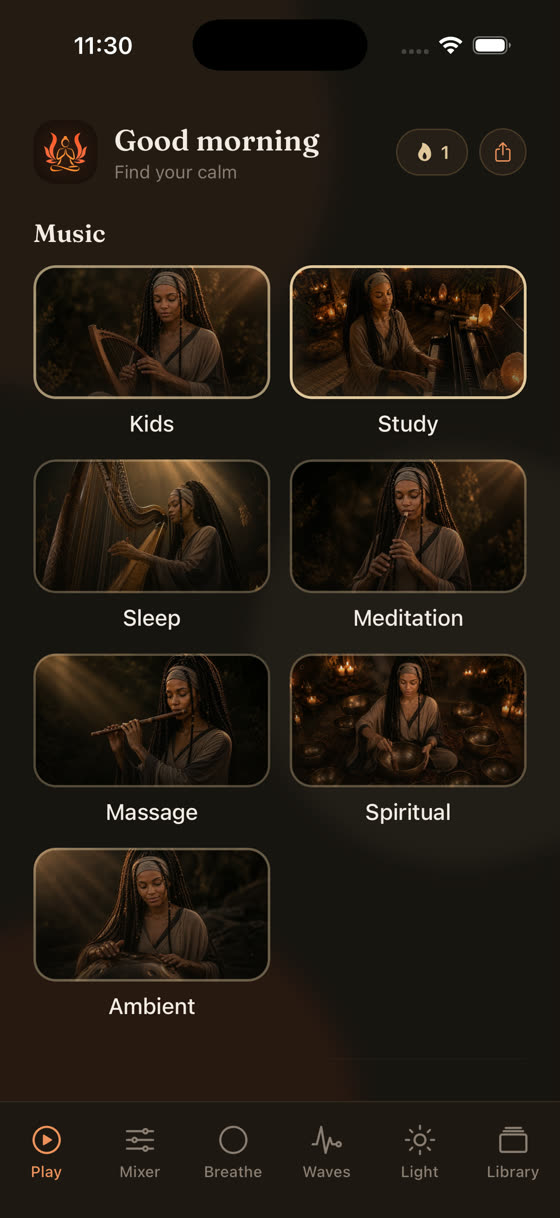
This is part of why a single fixed playlist rarely suits a whole study session. The home screen in the app treats each kind of listening, focus, calm, sleep, as its own space rather than one long undifferentiated queue, so switching from deep-work music to something looser for an admin stretch takes a tap, not a new search.
How brainwave tones fit in, and where the evidence actually stands
Binaural beats come up in nearly every Reddit thread on this topic, usually with strong opinions attached. The honest position is that the research is thin and mixed. Some small studies suggest certain frequency ranges may correlate with changed alertness or relaxation; plenty of others find no measurable effect. Nobody should promise it will make you focus better, because the evidence doesn't support that promise.
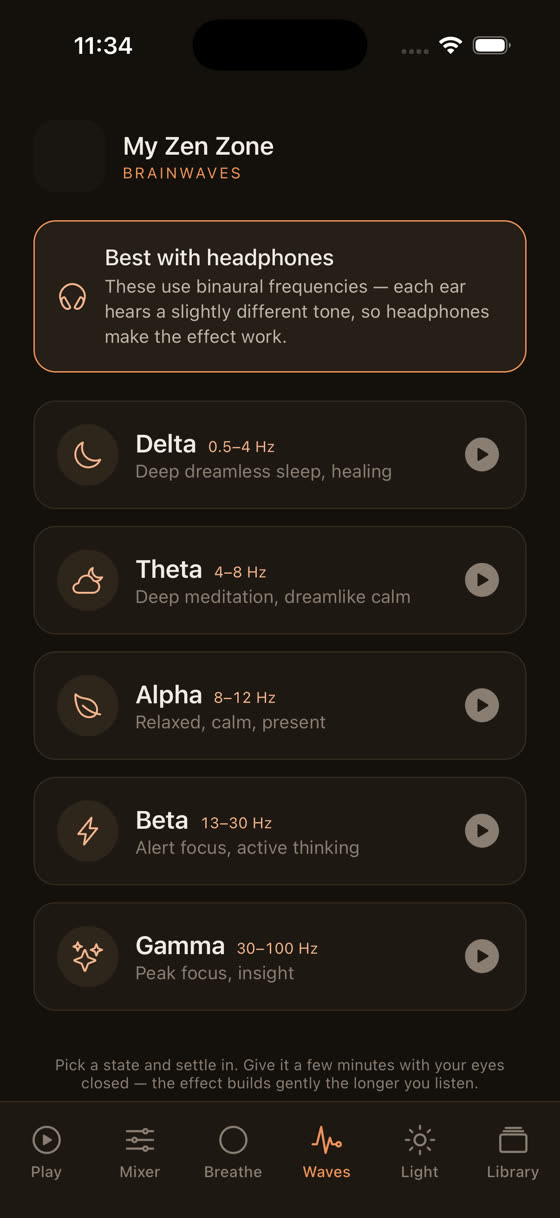
What's reasonable to say is that some people find the steady, almost textureless quality of these tones genuinely easier to tune out than a track with any musical structure at all, which is a real and useful effect even without a neuroscience claim attached to it. The brainwave tones screen sits alongside the regular music library for exactly that reason, as one more option to try against your own honest 25-minute test, not a guaranteed fix.
The part Reddit can't give you: a library that doesn't repeat
The structural problem with crowd-sourced recommendations is that everyone converges on the same handful of popular tracks, and popular tracks get used until they stop being neutral background and start being familiar enough to notice. A library that adds new material on a fixed schedule avoids that slide into staleness in a way a single YouTube stream never can. My Zen Zone adds new tracks every two weeks, all composed and recorded by one in-house musician rather than scraped from a stock library, which keeps the catalogue from turning into the same ten loops everyone's already numb to. If study music is a genuine daily habit rather than a one-off search, that rotation matters more than any single track recommendation a Reddit thread can give you. You can see the full range, including the focus, calm and sleep sound worlds mentioned above, at myzenzone.app, or go straight to the app and run your own tempo test tonight.
Common questions
Is lo-fi hip-hop actually good for studying or just popular because of the livestream?
Both things are true at once. Its popularity started with the "lofi girl" stream, but the format genuinely fits the no-lyrics, steady-tempo pattern that tends to interfere less with reading and writing. It's not magic, it's just a low-arousal, low-melody genre that happens to be easy to find in endless supply.
Do binaural beats really help you focus?
The evidence is thin and mixed, so no confident claim can be made either way. Some people find the steady, textureless sound easier to tune out than normal music, which is a real benefit even without proof it changes brain activity. Treat it as one option to test for yourself, not a guaranteed focus tool.
Should I listen to the same study playlist every single time?
Repetition can help build a habit cue, but the same loop for hours or weeks often stops being neutral and starts being distracting because it's become familiar. Rotating in new instrumental tracks periodically, rather than looping one ten-hour mix indefinitely, tends to keep the background actually in the background.
What's better for studying, instrumental music or total silence?
Neither wins universally. Silence suits people sensitive to any auditory distraction, while low, steady instrumental sound helps mask sudden background noise, a door, traffic, other people, which is often more disruptive than the music itself. If your environment is quiet already, silence may genuinely be the better option.
Can music with lyrics ever help me study?
Yes, if you don't understand the language being sung, or the vocals are wordless textures rather than lyrics. The problem isn't singing itself, it's your brain processing recognisable language while trying to read or write, which creates direct competition. Familiar songs in your own language are the riskiest category by far.