Blueberries, fatty fish, eggs, dark chocolate, and water. Those are the foods with the most consistent research behind them for supporting attention and memory, mostly because they stabilise blood sugar and supply nutrients your brain actually uses, not because any single ingredient flips a mental switch. But the food list is the smaller part of the answer. Timing, blood sugar swings, and what's happening in the room while you eat and work matter just as much, and almost no article about "brain food" mentions them.
The short, honest list
If you want the quick version: oily fish like salmon and mackerel for omega-3 fatty acids, which make up a meaningful chunk of your brain's structure. Eggs for choline, which your body uses to make acetylcholine, a neurotransmitter tied to memory and alertness. Berries, especially blueberries, for flavonoids that some research links to improved recall. Leafy greens and nuts for vitamin E and folate. Dark chocolate, in small amounts, for a modest caffeine and flavonoid combination. Water, which sounds too obvious to mention, except that even mild dehydration measurably worsens concentration and mood, and most people who feel foggy at 3pm are simply under-hydrated, not under-nourished.
None of this is exotic. There's no fruit from the Amazon that will double your output. The honest version of "brain food" is closer to "foods that don't spike and crash your blood sugar" than it is to any single miracle ingredient.
What's actually happening in your brain
Your brain runs almost entirely on glucose, and it uses a disproportionate share of your body's energy for its size, something like a fifth of your daily calories. That's the mechanism behind most of the food-and-focus advice you'll read: the goal isn't to find a magic nutrient, it's to keep glucose supply steady rather than letting it spike and crash. A bagel with jam at 8am gives you a sharp rise in blood sugar, a rush of alertness, and then a dip an hour later that feels a lot like tiredness but is really your body overcorrecting with insulin. Protein and fibre slow that curve down. That's why eggs with wholegrain toast outperform a pastry for sustained focus, even though the pastry has more sugar and, you'd think, more "energy."
Omega-3s and choline matter on a longer timescale. They're structural, feeding into the physical material your brain is built from and the chemistry it uses to send signals, which is why their effects show up over weeks of consistent eating rather than within the hour after a meal. If you're hoping a plate of salmon tonight will sharpen tomorrow morning's meeting, that's not really how it works. If you're hoping that eating oily fish twice a week supports attention over the long run, that's a more reasonable expectation.
The mistake most articles on this get wrong
Most lists stop at naming foods and skip the thing that actually derails focus for most people: what they eat right before trying to concentrate, and how much of it. A large lunch heavy in refined carbs diverts blood flow to digestion and leaves you sluggish regardless of how many blueberries were in your smoothie that morning. Caffeine gets treated as uniformly good, when in fact timing it badly, say, a large coffee at 2pm, is a common reason people can't fall asleep at 11pm and then can't focus the next day from tiredness. The food-focus conversation and the sleep conversation are the same conversation. If you want to read more on how sleep itself gets protected through the evening, our piece on music for sleep covers the other half of that cycle.
Timing matters more than the ingredient
A small, steady meal two to three hours before a demanding task beats a large meal right before it. Grazing on nuts or a handful of berries mid-session beats a candy bar, because the slower release avoids the crash entirely. Caffeine works best in the first few hours after waking and again in a small dose around early afternoon, not stacked all morning, because tolerance builds fast and the jittery, unfocused feeling many people blame on "too much coffee" is really too much coffee too close together.
This is also where most people sabotage their own focus without realising it: skipping breakfast, then overcorrecting with a sugary snack at 11am, then wondering why 2pm feels foggy. The fix isn't a different food. It's spacing the same reasonable foods more evenly across the day.
What to actually eat before a deep work session
In practice, the combination that holds up best is protein plus slow carbohydrate plus a small amount of fat: eggs and oats, Greek yoghurt with berries and nuts, or wholegrain toast with avocado. Avoid a large sugary breakfast if you have a focus-heavy morning ahead. Keep water nearby rather than only coffee, since caffeine itself is mildly dehydrating. If you're working through lunch, a lighter meal with lean protein and vegetables will leave you sharper than a heavy carb-dominant plate that makes you want a nap by 1pm.
The afternoon crash, and what actually helps
The 2 to 4pm dip is partly circadian, your core body temperature and alertness naturally dip in the early afternoon regardless of what you ate, and partly dietary, from lunchtime carbohydrate spikes. Food can soften it, a small protein-rich snack rather than more sugar, but it won't eliminate it. This is exactly the window where background sound starts to earn its keep, because willpower alone rarely pulls you out of a genuine energy dip. A steady instrumental track at a slower, even tempo, something in the 60-70 bpm range, roughly a resting heart rate, can hold attention in place without adding the stimulation a loud or lyric-heavy track would.
This is where the mixer in My Zen Zone actually solves a real problem rather than just being a nice feature. Rain at a low level under a quiet piano loop, with a third layer of white noise turned down further still, gives you a consistent sound bed that masks office chatter or street noise without pulling your attention toward it the way a song with lyrics does. You set each layer independently rather than accepting whatever balance someone else decided on.
Sound is the other half of the focus equation
Food and sound solve different problems. Food stabilises the energy your brain has to work with. Sound manages the distractions competing for your attention once that energy is there. Neither fixes the other's job. A perfectly balanced lunch won't help you concentrate in a noisy open-plan office, and the best focus playlist in the world won't undo a blood sugar crash from a sugary breakfast.
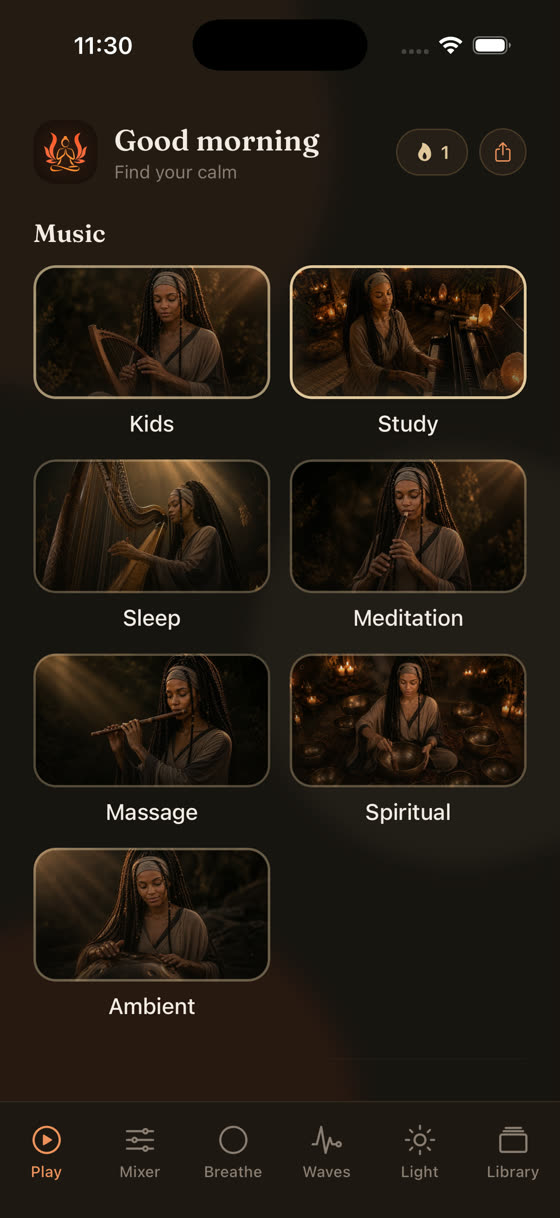
The Focus world in the app is built around this idea, tracks composed specifically for sustained attention rather than repurposed ambient music, with new ones added every two weeks so the same loop doesn't go stale after a month of daily use. If you want more detail on how tempo and instrumentation affect concentration specifically, our guide to music for focus and study goes deeper into that mechanism.
Building a routine you'll actually keep
The realistic version of all this isn't a strict diet plan. It's small, repeatable defaults: water on the desk, a protein-forward breakfast, caffeine before noon, a steady snack instead of a sugary one at 3pm, and a sound environment that doesn't need to be rebuilt from scratch every day. Offline downloads matter here too, since the plan falls apart the moment you're relying on a spotty connection to keep your focus track playing through a long session. Set it up once, keep it on your phone, and the environment takes care of itself while you deal with the actual work. You can see the full library, including what's new this fortnight, at myzenzone.app, or go straight to the app if you'd rather just try the Focus world tonight.
Common questions
Does drinking coffee actually help you focus or just feel alert?
Both, up to a point. Caffeine blocks adenosine, the chemical that builds up and makes you feel tired, so it genuinely improves alertness and reaction time in moderate doses. Past a certain amount, or too late in the day, it adds jitteriness and disrupts sleep, which undercuts the next day's focus. Moderate and early beats large and late.
Are brain food supplements worth taking instead of eating the foods?
For most people, no. Whole foods come with fibre, water content, and a mix of nutrients that supplements isolate and lose. Omega-3 or multivitamin supplements can help if your diet genuinely lacks those nutrients, but they're not a substitute for the steady blood sugar and hydration that eating actual meals provides.
How quickly do brain foods actually start working?
Hydration and blood sugar effects can be felt within 30-60 minutes. Structural nutrients like omega-3s and choline work on a much longer timescale, closer to weeks of consistent eating, since they're feeding into brain tissue and neurotransmitter production rather than giving an immediate energy boost.
Is sugar really that bad for focus or is that overstated?
It's not overstated, but it's about pattern, not one biscuit. A single sugary snack causes a sharp rise and later dip in blood sugar, which shows up as a concentration slump an hour or two afterward. Occasional sugar isn't the problem; relying on it repeatedly through the day to re-energise is.
What should I eat specifically before a meditation or wind-down session?
Keep it light. A heavy meal makes it harder to settle because your body is busy digesting rather than relaxing. A small snack, herbal tea, or nothing at all if you're not hungry works better before using something like the app's breathing screen or a guided session in the evening.