The Short Answer
On SiriusXM, the channel most people mean when they search this is simply called Spa, and it has sat at channel 65 for a long stretch of years, playing a continuous stream of ambient and new-age instrumental tracks aimed at relaxation. That said, satellite radio reshuffles its lineup every so often, and the number can differ depending on whether you're listening in a car, through the SiriusXM app, or on a connected streaming device. If 65 doesn't show up for you, open the channel guide inside the app and search "Spa" directly. That's faster and more reliable than trusting a number printed in an old article, including this one.
Why So Many People Search for This
Nobody actually cares about satellite radio trivia for its own sake. What's really going on is that someone is lying in bed, or sitting at a desk, or driving home after a long day, and they want something calm playing in the background without having to think about it. "Spa music" has become shorthand for a whole category: soft piano, string pads, maybe a flute line, nothing with lyrics, nothing that demands attention. It's the same impulse behind searches like "music for sleep" or "background music for studying," and we've written about that broader topic at best music for sleep if that's closer to what you're actually after.
What You Actually Get on a Satellite Spa Channel
A satellite spa channel is a curated, rotating playlist built by a programming team, pulling from licensed tracks by many different artists. You get variety, which is nice, but you get no control beyond volume. You can't isolate the rain sound from the piano because there isn't one, it's all baked into a single mixed track. There's no sleep timer tied to the content itself, just whatever your car or device does on its own. Depending on your subscription tier there may be occasional DJ drop-ins or promotional spots between songs, which is a strange thing to hear right as you're drifting off. And without an active connection, whether satellite signal in a dead zone or data for the app, the music simply stops.
None of this makes it bad. It makes it a radio station, built for passive listening in a car, not a tool built around the specific job of helping you sleep, focus, or come down from a stressful day.
The Actual Mechanism Behind Why This Kind of Music Works
When spa or ambient music does help someone relax, there's usually something structural going on, not just vibes. Tempos in this genre tend to sit around 50 to 70 beats per minute, which is close to a resting heart rate, and there's reasonable thinking that matching your environment's rhythm to that range nudges your body toward a calmer state rather than fighting it. The absence of lyrics matters too: your brain processes language automatically, even when you're trying to ignore it, so instrumental music removes a layer of competing attention that a song with words doesn't. Slow harmonic movement, meaning the chords change gradually rather than jumping around, also reduces the number of small surprises your brain has to register.
It's worth being honest here: this is a reasonable, widely shared theory, not a settled medical finding. The research on music and sleep or focus is observational more often than conclusive, and individual responses vary a lot. Some people focus better with silence. Some find any music at all distracting. Treat spa-style music as a tool worth trying, not a guaranteed fix.
Where the Satellite Model Breaks Down
Here's the real gap. Even when the music itself is good, a fixed broadcast channel can't adapt to what you specifically need in that moment. Maybe you want rain a bit louder than the piano tonight, or you want the piano alone with no nature sound at all. Maybe you want a ten-minute breathing exercise layered quietly under the music rather than instead of it. A satellite channel can't do any of that. You get what's playing, when it's playing, at whatever mix the producer chose.
This is the exact problem a proper sound mixer solves, and it's easiest to just watch it happen rather than have it described.
Three separate sound layers, each with its own level, moved live while the track keeps playing underneath. That's the difference between a radio channel and a tool.
What We Built Instead
My Zen Zone is built around one musician composing and recording every track in-house, with hundreds of pieces already in the library and new ones added every two weeks, so the sound stays consistent in quality even as it keeps growing. But the bigger difference from something like a spa radio channel is control. Instead of a fixed playlist, you get categories built for specific situations.
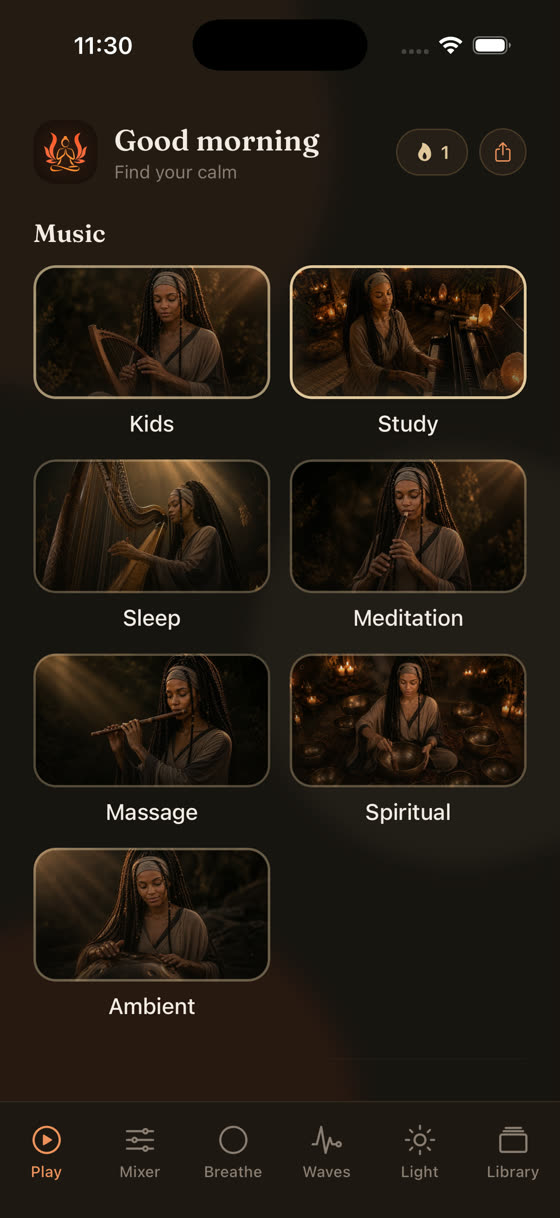
Each category, Sleep, Focus, Meditation, Calm, Music, is its own world rather than one undifferentiated stream, so what you pick for falling asleep is composed differently from what you'd pick to concentrate while working. Inside most tracks you can open the mixer and bring in nature sounds, rain, waves, wind, each at its own independent level alongside the music itself.
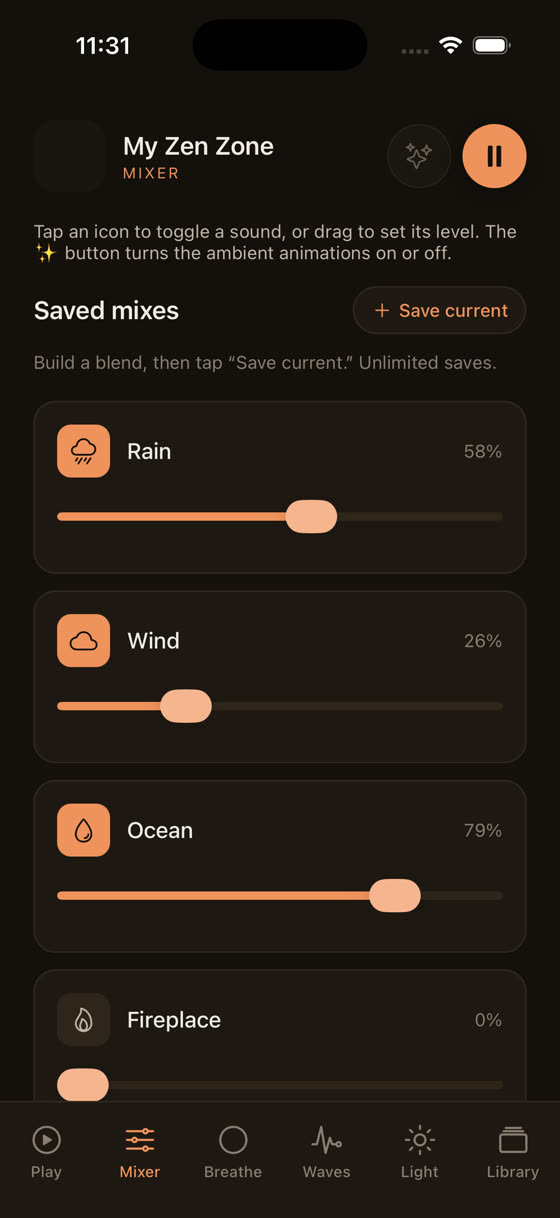
And for guided sessions, the voice doesn't replace the music the way it does on most meditation apps, where the track pauses so someone can talk at you. Here the guided voice is just another layer you can raise or lower, sitting over the music and nature sound rather than stopping them.
Add a sleep timer so the audio actually stops instead of playing all night, offline downloads so a weak signal or no data plan never cuts the music off mid-track, a light screen for winding down before bed, and a set of brainwave tone options for people who want something more clinical sounding than piano. None of this is a knock on satellite radio doing its job as radio. It's just a different job.
Building Your Own Version of This Tonight
If you've been using SiriusXM's Spa channel mainly to fall asleep or settle down after work, try rebuilding the same idea with more precision. Open the Sleep or Calm category, pick a track with a tempo that feels unhurried rather than busy, and bring in a single nature sound at a low level underneath it rather than several competing at once. If your mind is still racing, try the breathing screen for a few minutes first.
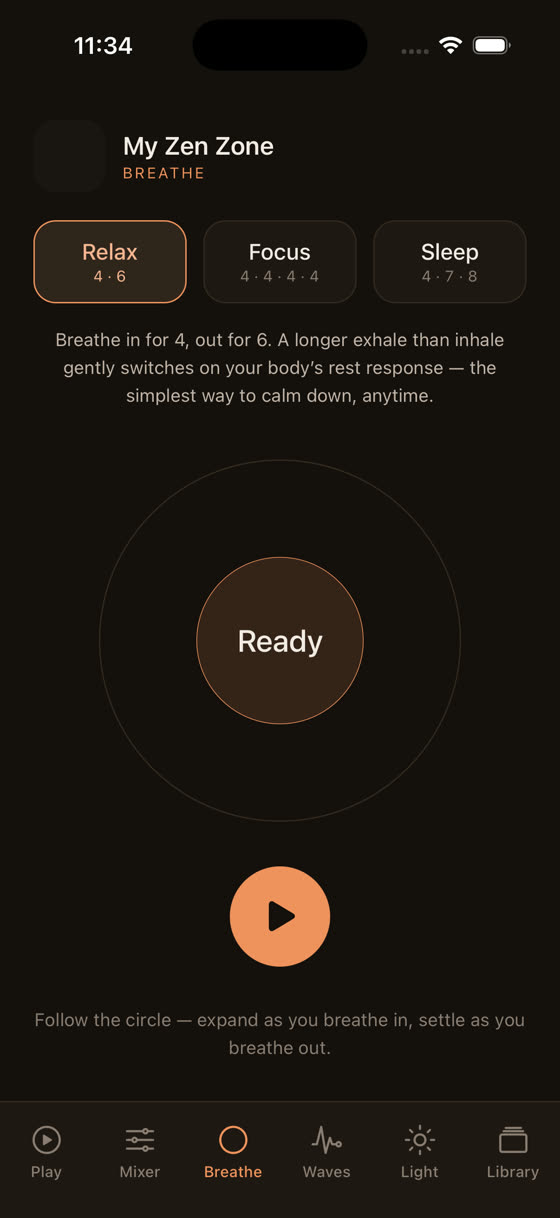
A simple four-to-six pattern, four seconds in and six seconds out, tends to slow things down faster than music alone, and it costs you two minutes before you even start listening. If you're doing this for work rather than sleep, the same logic applies with different material, and there's a more detailed breakdown at music for focus and study.
Is It Worth Switching
If all you want is music playing in the car and you already pay for satellite radio, there's no reason to abandon the Spa channel. It's pleasant, it's simple, and simple has its own value. But if you've noticed yourself wishing you could turn the rain down, skip the ad, or keep listening after you leave the car, that's usually the sign you've outgrown a fixed channel and want an actual instrument for building your own calm. You can see the whole thing for yourself at myzenzone.app, or go straight to /get if you already know you want it.
Common questions
Does SiriusXM have more than one relaxation channel?
Spa is the main one most people mean, but SiriusXM also runs channels leaning more toward new age, soundscapes, or soft jazz depending on your package. The exact lineup shifts over time, so the quickest way to check is searching keywords like "relax" or "spa" directly in the app's channel guide rather than relying on a fixed number.
Can I listen to SiriusXM's Spa channel without a subscription?
No. SiriusXM is a paid satellite and streaming service, and Spa, like all its channels, sits behind a subscription tier. Free trials are sometimes offered through car manufacturers or promotions, but ongoing access requires an active plan.
Is spa music actually good for sleep, or is that just marketing?
The reasoning behind it is sound, slow tempo, no lyrics, gradual chord changes can reduce the mental stimulation competing with sleep. But solid proof is thin, and responses vary person to person. It's worth trying as one tool among several, not a guaranteed fix.
What's the real difference between a music app and a radio channel for this?
A radio channel gives you one fixed mix decided by someone else, with no control beyond volume. A mixer-based app lets you set the level of each sound yourself, layer a guided voice over the music instead of pausing it, and set a sleep timer so it actually stops when you do.