The Short Answer
There isn't one best lullaby. There's a best pattern, and almost any gentle track built the right way will work if you stick with it. The pattern is: 60-80 beats per minute, a melody that repeats every 15 to 20 seconds without surprises, soft instrumentation (piano, music box, warm strings, a hum), played at a near-whisper volume at the same point in the bedtime routine every single night. Parents typing "best lullaby for babies" are usually hoping one perfect recording will do work that repetition actually does. The specific track matters far less than the consistency behind it.
Brahms' Lullaby isn't magic because of its melody. It works because it has been sung slowly, quietly, and unchangingly by generations of exhausted parents at roughly the same time each night. That repetition is the active ingredient, not the key change in bar four.
Why Tempo Matters More Than Melody
A newborn's resting heart rate sits somewhere between 110 and 160 bpm while awake. By the time they're drowsy, both heart rate and breathing slow considerably. Music at 60-80 bpm sits below that drowsy range, which is the point: it's not matching the baby's current state, it's modelling the slower one you want them to drift into. This is sometimes called entrainment, the idea that a steady external rhythm can nudge an internal one. The evidence specifically in infants is thin, and nobody should promise it works like a dial you can turn. But the direction makes sense, and it costs nothing to test on your own baby over a week rather than trust it as doctrine.
What you want to avoid is anything syncopated or front-loaded with dynamics, a swelling string section, a sudden cymbal wash, a key change meant to surprise an adult listener. A baby's nervous system doesn't want a journey. It wants the same four bars, forever, at low volume.
What Most Lullaby Advice Gets Wrong
Three things come up constantly in lullaby guides that don't hold up once you've actually done a few hundred bedtimes.
- Louder isn't more soothing. A lullaby played at conversational volume competes with a baby's own breathing and your movements in the room. It should be barely audible from standing height, more felt than heard.
- Novelty is the enemy, not the friend. Streaming playlists that shuffle in a "new" lullaby every night sound like variety but function as mild stimulation, because an infant brain processes anything unfamiliar with more attention than something it has filed away as safe and boring.
- Live singing isn't automatically better. A parent's voice carries enormous emotional weight, which is wonderful, but it also carries that parent's actual mood, tempo drift and pitch on a hard day. A recorded track doesn't get tired at 11pm. Using both, your voice for the cuddle and a steady recording underneath, tends to work better than either alone.
The Instruments That Actually Help
If you're choosing a track rather than composing one, listen for these: a music box or soft piano carrying the main line, a low string pad or synth underneath with no sharp attack, and if there's a human voice, something wordless, a hum or a breathy "la", rather than full lyrics. Lyrics ask a brain to process language, which is more active work than most people assume, even for a baby too young to understand words.
Avoid bright digital bells, anything with a hard transient (a struck glockenspiel sounds charming to an adult and sharp to a six-month-old), and arrangements that build. A good baby lullaby sounds almost the same in minute four as it did in minute one. If you've ever found a track oddly hypnotic in a slightly boring way, that boredom is doing its job.
Building the Association, Not Just Picking a Track
The single highest-leverage thing you can do is pick one track and commit to it for weeks, not nights. Babies build sleep associations quickly: same crib, same dim light, same lullaby, same smell of the same muslin. The lullaby becomes a cue rather than entertainment. Swapping it out because you're bored of it (you will be, you'll hear it four hundred times) undoes some of that work. It's fine to retire a lullaby eventually, usually around the same time you'd change any other part of the routine, but don't rotate for variety's sake.
This is where apps built around endless new releases can quietly work against the goal. Our library adds new tracks every two weeks because that variety is genuinely useful for adult sleep, focus and general wind-down, where novelty keeps things from going stale. For a baby's bedtime lullaby specifically, the opposite applies: pick one, bookmark it, leave it alone.
Layering a Lullaby With a Nature Sound
Many parents end up running a lullaby and a white noise machine side by side on separate devices, guessing at relative volume every night. A mixer where you can hold both in one place and set independent levels removes that guesswork entirely, lullaby at a bare whisper under rain or a soft hush, balanced once and then saved.
That's the clip worth watching if you've ever stood in a dark nursery at 1am trying to decide whether the rain app or the lullaby app should be louder. Set each layer once, save it, and it's the same mix every night without you touching two phones at arm's length over a cot.
Setting the Room Up for Tonight
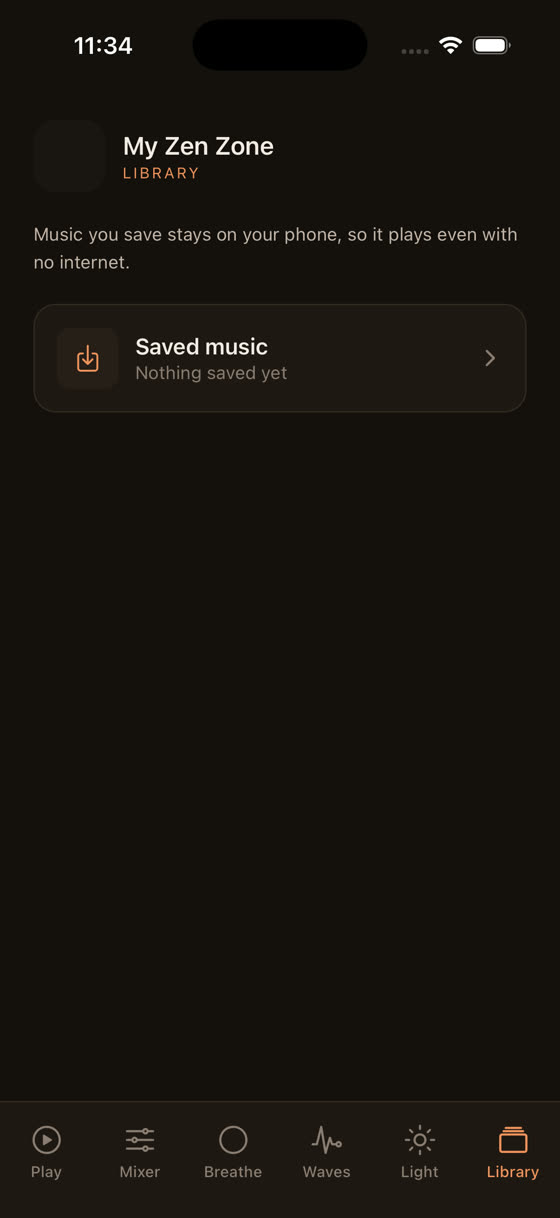
A few practical points that matter more than people expect. Keep the phone or speaker well away from the crib, both for safety and because proximity makes volume harder to judge. Use a sleep timer so the music fades out rather than running all night at a volume that was only ever meant for the settling window. And if your wifi is patchy near the nursery, download the track for offline playback before you need it rather than discovering a buffering gap at the worst possible moment.
A dim light screen in the ten minutes before the lullaby starts helps signal the same thing the music does: this part of the evening is slow and predictable. The two cues together tend to work better than either alone.
When the Lullaby Stops Working
Around four to six months, and again through sleep regressions or teething, a lullaby that worked reliably for weeks can suddenly stop landing. This usually isn't the music's fault. Developmental leaps, new teeth, and increased awareness of a parent's absence all change what a baby needs at bedtime, and no track fixes that on its own. If a previously solid lullaby routine falls apart for more than a week or two, it's worth looking at the wider sleep picture rather than auditioning new songs. Naps and night sleep also respond differently: a track that settles a 7pm bedtime brilliantly may do very little for a 2pm nap in a bright room, because the environment is doing less of the work.
Where My Zen Zone Fits
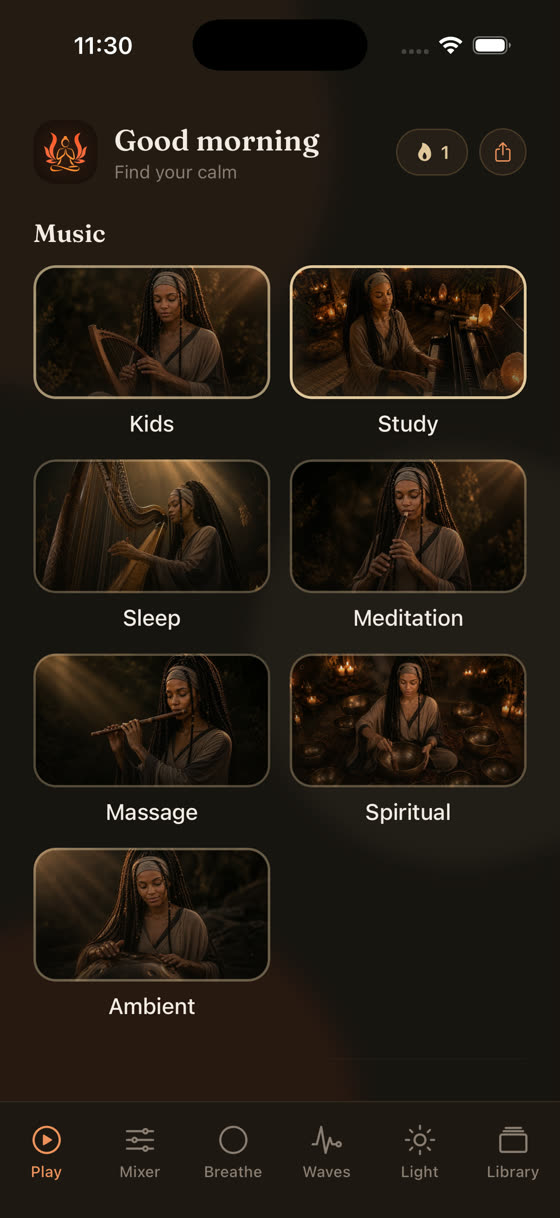
The home screen keeps Sleep, Focus, Calm and Meditation as separate worlds, so you're not scrolling past upbeat focus tracks to find something slow enough for a crib. Within Sleep there's enough depth that you can find one lullaby-style track, built by the same composer across the whole library so the tone stays consistent, and simply leave it as your baby's track for months. A subscription also opens the full library in a browser, which is handy if you want to preview tracks on a laptop at a reasonable volume before deciding which one earns the repeat-forever slot. You can see the whole thing at myzenzone.app or go straight to the app if you'd rather just start listening tonight.
Common questions
Is it bad to play a lullaby all night long?
Not inherently, but it's worth questioning the habit. Music running for eight hours means the baby never experiences full silence, which some sleep approaches try to build tolerance for. A sleep timer set to 20-40 minutes, enough to cover the settling window, is a reasonable middle ground.
Should lullabies have words or be instrumental?
Instrumental, or wordless humming, tends to work better. Lyrics require a brain to process language, which is more active than most people assume even for a pre-verbal baby. A simple melody line over a steady pad does the calming work without asking for any comprehension.
Can white noise replace a lullaby entirely?
Yes, for many babies white noise alone works fine, and some find it more effective than melody because it has no structure to half-notice. It's a reasonable choice if lullabies haven't helped. Try one approach consistently for at least a week before judging it rather than switching nightly.
Why does my baby wake up when the lullaby stops?
If the track is the sleep association, its absence can register as a change in environment, which sometimes triggers a brief waking. A longer track, a timer set past the settling window, or pairing the lullaby with a steady nature sound that continues after it ends can all soften that transition.