The rain in Stardew Valley is a single looping ambient sample, roughly a steady patter of rainfall with occasional distant thunder cracked on top, triggered whenever the in-game weather flips to "rain" or "storm." There's no procedural variation to it. It's one recording (or a small set of layered recordings) that repeats on a loop for as long as the weather holds, which in game terms is usually one full in-game day, around 13-15 real-time minutes before the cycle can change again.
That's the direct answer. The more interesting question is why so many people type this into Google at 11pm, and the answer to that has nothing to do with farming sims and everything to do with how our brains respond to steady, predictable noise.
How Eric Barone actually built the sound
Stardew Valley is famously a one-person project. Eric Barone, who goes by ConcernedApe, wrote the code, drew the art, composed the music, and designed the sound effects himself over several years. The rain audio sits in that same homemade tradition: it's not a licensed nature library or a field recording made with a parabolic mic in a forest. It's a short sample, likely built or sourced to fit the game's retro-pixel aesthetic, looped cleanly enough that most players never consciously notice the seam.
That's a reasonable design choice for a farming game. Rain in Stardew Valley exists to tell you something practical: your crops don't need watering today, so you're free to mine, fish, or visit town. The sound is a gameplay signal wearing an ambient costume. It was never built to be listened to on its own for forty-five minutes while you try to fall asleep, which is exactly what thousands of people now use it for, usually ripped from the game or re-recorded onto YouTube as "Stardew Valley rain sounds 10 hours."
Why people reach for it when they can't sleep or can't focus
Rain sits in a sweet spot acoustically. It's broadband noise, meaning it covers a wide spread of frequencies at once rather than a single tone, which gives it a texture close to pink or brown noise. That kind of noise is good at masking sudden, sharper sounds, a door closing, traffic outside, a partner turning over, because it fills in the frequency gaps those sounds would otherwise stand out in. On top of that, rain is a sound almost everyone associates with staying indoors, being still, having nowhere to be. The association does real work alongside the acoustics.
Stardew Valley's version adds a second layer of appeal: nostalgia and low stimulation. If you've spent fifty hours in that game, the rain sound is already tied to a specific, unhurried state, tending a farm at your own pace. Hearing it again outside the game can genuinely cue some of that same calm, the way a theme song can put you right back in a mood. This is closer to the territory we cover in our piece on what actually helps sleep, where association and repetition matter as much as the raw acoustics.
Where the game's loop actually falls short for sleep
Here's what most articles answering this question skip entirely: a short game loop is a poor tool for eight hours of sleep, and the reasons are mechanical, not just about taste. First, loop length. If the sample is fifteen or twenty seconds long, your brain, even while mostly asleep, can start to register the repetition. Novelty detection is a survival mechanism; a true loop point, however well hidden, is a tiny recurring event, and recurring events are exactly what light sleep stages are tuned to notice.
Second, the thunder. Game designers often add occasional thunder cracks to rain for atmosphere, because in a game you're awake and want texture. For sleep, a sudden transient spike like that is close to the opposite of what you want; it's a startle sound layered into something meant to be calming. Third, there's no control. In the game you get the volume the mixer gives you and nothing else. You can't blend it with anything, you can't fade it out after forty minutes, you can't lower just the thunder while keeping the rain.
What a sound actually needs to do to help you sleep or focus
Good sleep and focus audio tends to share a few traits that game sound effects usually don't bother with. It's long enough, or generated in a way, that a listener never consciously catches the seam. It avoids sharp transients, no claps, no sudden peaks in volume or pitch, because those pull attention rather than release it. And critically, it gives you some control over the final mix rather than handing you one fixed recording at one fixed level.
This is the actual difference between a game's ambient effect and audio purpose-built for rest. It's not that one is "real" rain and the other isn't; it's that one was designed to signal weather for ninety seconds of gameplay, and the other has to hold up for a full night or a two-hour study block without drawing attention to itself.
Building a better rain mix tonight
If what you actually want is rain as a sleep or focus backdrop, the fix is simple: layer it instead of looping it alone. A rain recording under a very slow, low piece of music, something sitting around 50-60 bpm, well below resting heart rate, gives your ear two textures to settle into instead of one repeating one. The music fills in where a single rain loop goes thin and predictable, and the rain softens any part of the music that might otherwise feel too present.
That's the idea behind the mixer in My Zen Zone: three sound layers, each with its own independent level, so you can set rain fairly low, bring a slow piano or drone piece up underneath it, and leave a third layer, maybe a distant fire or wind, almost silent just to fill space. Nothing here is a single fixed recording. You're building your own mix on the fly, the way you'd adjust a thermostat rather than accept whatever temperature a room happens to be.
The library behind it, and why it keeps growing
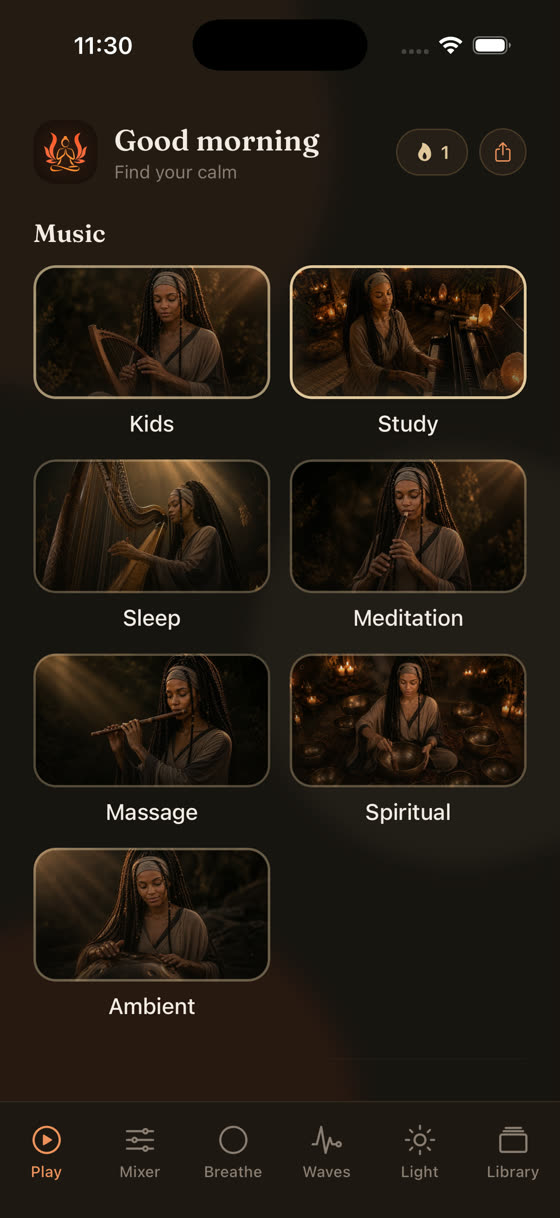
Every track in the app is composed and recorded by one musician working across hundreds of tracks sorted into sleep, focus, meditation, and calm, with new pieces added roughly every two weeks rather than a static playlist you exhaust in a weekend. That matters for exactly the problem a short game loop has: variety means you're far less likely to start noticing repetition, because you're rarely hearing the same fifteen-second sample enough times in a row for your brain to flag it. If rain and slow piano stop working for you on a given night, there's a different texture waiting rather than the same loop on repeat.
Setting it up so you don't have to think about it
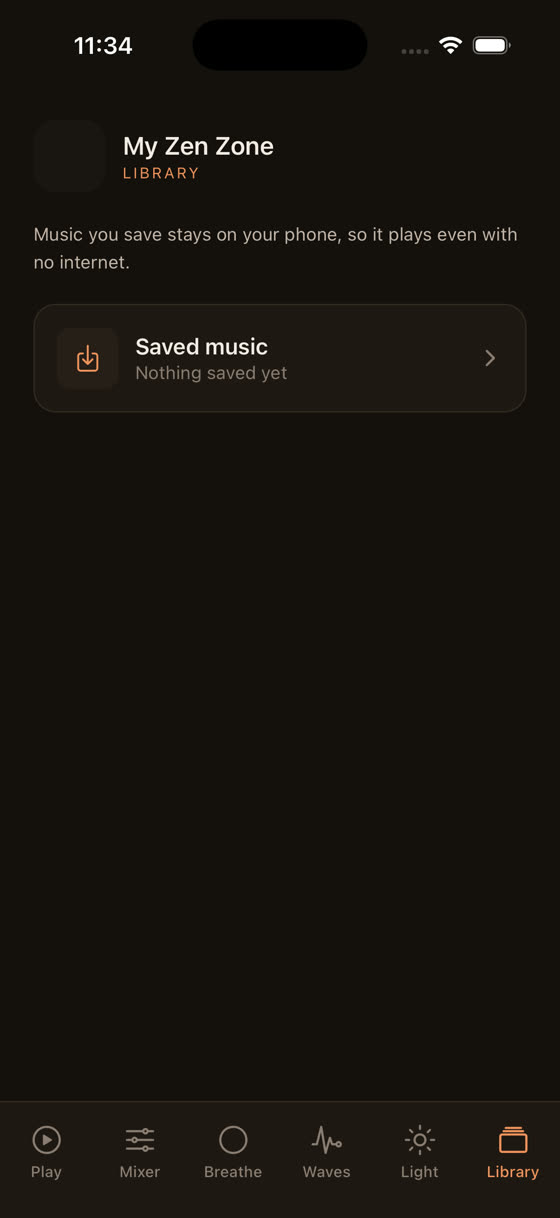
Practically, the routine that works best is short. Pick a rain-based mix in the sound library, set a sleep timer so the audio fades out on its own rather than running all night, and dim the light screen if you're using the app right before bed. None of this requires active effort once it's set; that's the point. A tool built for winding down should ask less of you at 11pm, not more, which is also why offline downloads matter if you're somewhere with patchy signal and don't want playback cutting out mid-loop. The same mixing approach works during the day for focus and study sessions, just with the rain pulled down and a steadier, slightly more rhythmic layer brought up instead.
You can try the full mixer and library for free by starting at the app's download page, or see the whole range of categories first at myzenzone.app.
Common questions
Can I actually download the Stardew Valley rain sound to use for sleep?
Technically you can extract it from the game files or find re-uploads on YouTube, but it's a short looped sample built for gameplay feedback, not extended listening. It will repeat noticeably over a full night and includes occasional thunder, which can act as a startle sound rather than a calming one.
Is rain sound actually proven to help you sleep?
Evidence here is limited. Steady broadband noise like rain is understood to mask sudden disruptive sounds, which is plausible and widely reported anecdotally, but there isn't strong clinical research proving it improves sleep quality for most people. It's reasonable to try, not something to expect guaranteed results from.
Why does a looped sound eventually become distracting instead of relaxing?
Short loops repeat often enough that your brain's novelty detection, which stays partly active even in light sleep, starts registering the recurring seam as a small event. Longer, more varied, or layered audio avoids giving your brain that same repeating cue to notice.
What's better than rain alone for falling asleep?
Layering works better than any single sound played alone. Pairing a soft rain or nature texture with slow, low-tempo music, roughly 50-60 bpm, gives your ear more to settle into and smooths over the predictability of either sound by itself. A mixer that lets you balance both is more useful than a fixed track.
Does My Zen Zone have rain sounds like in games or movies?
It has original nature and ambient textures, including rain-type sounds, that you layer yourself using the in-app mixer alongside music composed specifically for sleep, focus, or calm. Rather than one fixed loop, you set the level of each sound and can adjust it differently every night.