The short answer
You focus better in school by controlling two things most students never touch: the sound in your environment and the gaps between study blocks. Willpower is not the main problem. A classroom with scraping chairs, a bedroom with a sibling's TV through the wall, a phone that buzzes every four minutes — these pull your attention away faster than any lack of discipline could. Fix the environment first, then the habits around it, and concentration stops feeling like a fight.
Why your brain keeps drifting
Every time something interrupts you, even for three seconds, your brain doesn't just pause and resume. It has to rebuild the mental context it was holding: where you were in the problem, what you were about to write, which formula you were halfway through. That rebuilding takes real time, and it's expensive in a way that feels invisible. You don't notice the cost of forty small interruptions across an hour of homework. You just notice that the hour produced almost nothing.
This is the part most study-tips articles skip. They tell you to "eliminate distractions" as if that's a single action, then move on. In practice it means identifying the specific triggers in your own space — a notification sound, a particular hallway noise, the urge to check your phone the second you finish a sentence — and removing or masking each one deliberately. General advice doesn't fix a specific room.
Build one consistent study environment
Unpredictable sound is worse than loud sound. A silent room that occasionally erupts into a door slam or a sibling shouting is harder to concentrate in than a room with a steady, low layer of sound running underneath everything. This is why libraries often feel easier to work in than a quiet house: the background hum is constant, so your brain stops monitoring it for threats or changes.
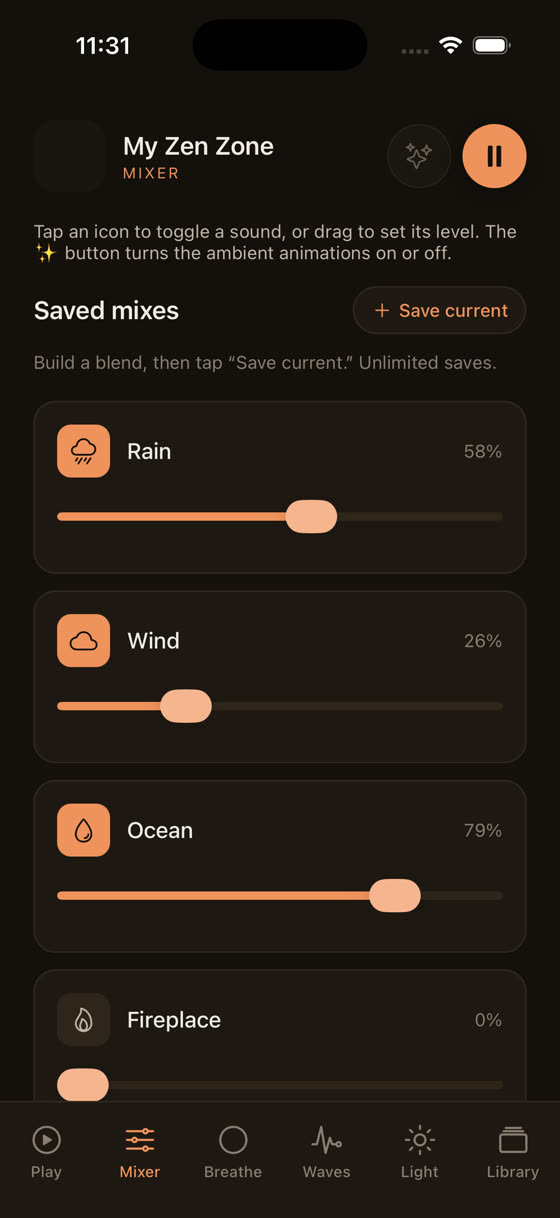
You can recreate that constancy anywhere with layered background sound. A steady wash of rain, a soft instrumental track, or a low tone bed does the same job a library's hum does — it gives your attention one stable thing to settle against, so the sudden doorbell or dog bark doesn't land as hard.
This is where a mixer with separate levels for each sound matters more than a single playlist. Rain masks a noisy street. A thin layer of music under it keeps the rain from feeling sterile. You're not choosing one sound and hoping it works for the whole session — you're tuning three or four at once until the room feels neutral.
What kind of music actually helps
Lyrics compete directly with the part of your brain handling written language, which is most of what school homework involves — reading, writing, note-taking. If you're doing maths problem sets or anything non-verbal, lyrics matter less. But for essays, reading comprehension, or memorising vocabulary, vocal tracks pull focus away from the words in front of you even when you think you've tuned them out.
Tempo matters more than genre. Something around 60-70 bpm, close to a resting heart rate, tends to sit underneath concentration rather than compete with it. Fast, rhythmically complex music — even instrumental — asks your brain to track a pattern, which is itself a small cognitive job. A slow, repetitive, low-contrast piece asks nothing. That's the goal: music with no surprises, nothing in it that makes you want to listen rather than work. We go into this in more detail in our piece on music for focus and study, including why the same track on loop often outperforms a shuffled playlist — predictability is the whole point.
Work in blocks, not in one long stretch
Attention isn't a tap you can leave running. It moves in cycles, roughly 90 minutes of rising and falling capacity for most people, sometimes shorter for teenagers still building the habit of sustained concentration. Trying to force two straight hours of homework usually means the first 40 minutes are sharp and the rest is spent rereading the same paragraph.
A simple structure works better: 25 to 45 minutes of focused work, then a real break of 5 to 15 minutes where you leave the desk entirely. Not a break spent scrolling — that's still cognitive load, just a different flavour. Stand up, stretch, get water, look out a window. If you want something more structured than staring at the wall, a short breathing reset works well here.
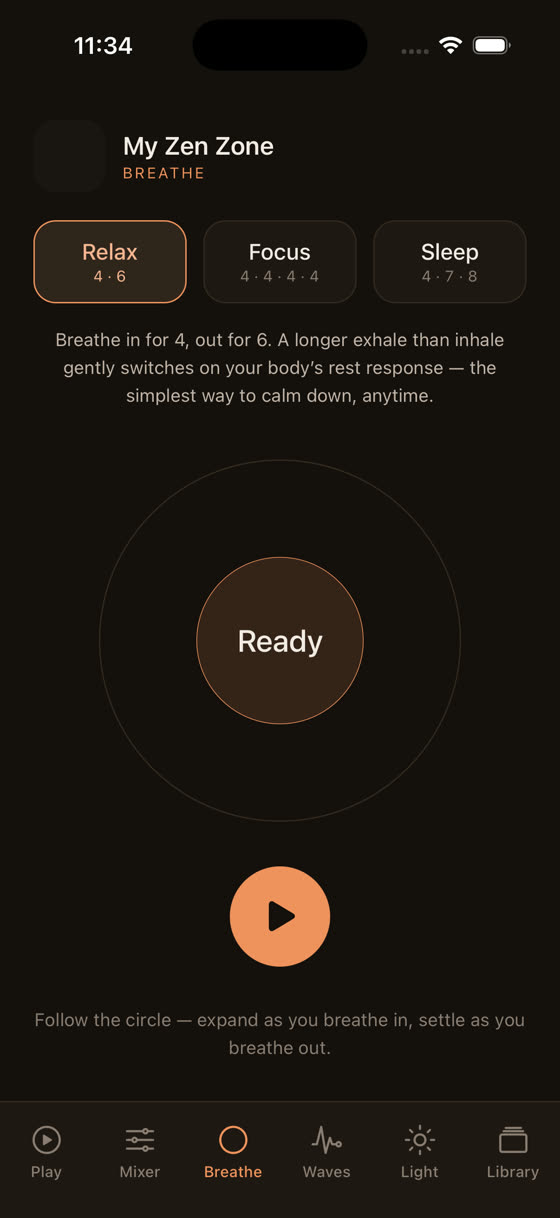
A few minutes of slow paced breathing, in for four counts and out for six, brings your heart rate down and genuinely resets attention before the next block, rather than just delaying the fatigue.
The night before matters more than the morning of
No amount of good music or room setup compensates for five hours of sleep. Focus the next day is largely decided the night before, by sleep quality and by how wound down your mind was at bedtime. Students who go from a bright phone screen straight to a dark pillow often lie there with homework and social anxieties looping, which shows up the next day as a shortened attention span regardless of how quiet the classroom is.
A consistent wind-down — dimming lights, slowing the pace of input, something calm playing as you fall asleep — makes a measurable difference to how rested you feel, even if it won't fix a genuine sleep disorder. We've written more on this in our guide to music for sleep, including why a sleep timer that fades out rather than cutting off matters for not waking up again at 2am.
Use the same cues every time
Your brain learns associations fast, including ones you didn't choose deliberately. If you only ever play a particular track or sound combination while studying, that combination starts to function as a switch: hearing it signals "this is focus time" before you've even opened the textbook. This is the same mechanism behind why a school bell used to work, or why some people can only fall asleep in their own bed.
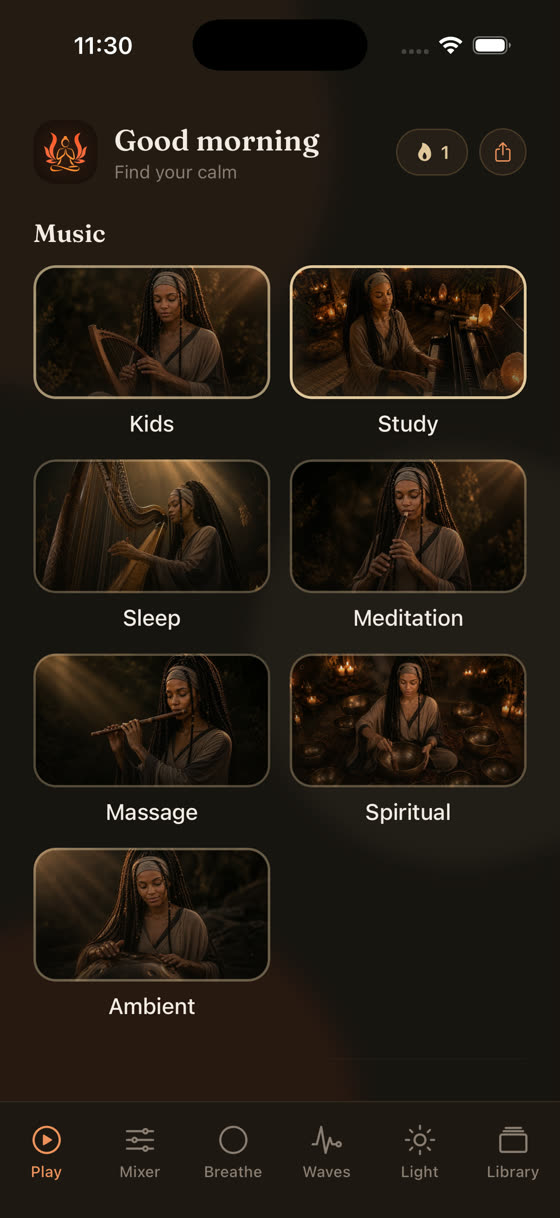
Build this deliberately rather than relying on shuffle. Pick two or three sound combinations — one for reading, one for problem sets, one for revision — and keep using the same ones. Consistency does more work here than variety. Within a few weeks the cue alone will start pulling your attention into focus mode faster than it did at the start.
What to actually change tonight
Pick one study session this week and change only the environment, not your effort. Put your phone in another room, not just face down. Put on a steady instrumental track at a low volume alongside a layer of rain or white noise, and let it run the whole session rather than switching tracks. Set a timer for 30 minutes, work until it goes off, then take a real five-minute break away from the desk. Repeat once more before stopping.
You can build this whole routine, including offline downloads for a classroom or library with no signal, through the app, with new instrumental tracks added every two weeks so the library doesn't go stale over a school term. Everything mentioned here — the mixer, the timer, the breathing screen — is free to try through the download page.
Common questions
Does classical music really help you study?
Some of it does, but not because it's classical. It helps when it's slow, instrumental and repetitive — qualities a lot of baroque and ambient music happens to have. Fast or dramatic classical pieces, with sudden swells or crescendos, can be just as distracting as pop music. The tempo and predictability matter far more than the genre label.
Is silence better than background music for studying?
Not usually, especially in a home with unpredictable noise. True silence makes sudden sounds — a door, a phone buzz, a sibling shouting — much more jarring. A steady low layer of sound, like rain or a quiet instrumental track, gives your attention something stable to rest against so interruptions land softer.
How long should a study session actually be?
Somewhere between 25 and 45 minutes of focused work, followed by a real break of 5 to 15 minutes away from the desk. Longer than that and concentration usually drops off sharply partway through. Shorter sessions with proper breaks tend to produce more retained material than one long, unbroken stretch.
Can background noise apps replace noise-cancelling headphones?
They do different jobs. Noise-cancelling headphones reduce how much outside sound reaches your ears. A background noise or music layer masks whatever sound does get through, so it's less noticeable. Used together they're strongest, but a layered sound mix alone still helps far more than studying in raw silence.
Why does my focus crash in the afternoon even after a good morning?
Attention runs in cycles through the day, and most people hit a natural dip in early-to-mid afternoon regardless of sleep quality. Pushing through with caffeine or sheer effort rarely works well. A short break, some daylight, or a five-minute breathing reset tends to bring concentration back faster than forcing another hour at the desk.