Short answer: meditation does not increase appetite in the way sugar or sleep deprivation does. What it often does is make you notice hunger you were already tuning out, because the whole point of the practice is to stop ignoring what the body is telling you. If you've finished a 20-minute sit and suddenly feel ravenous, that's usually awareness catching up with a signal that was there all along, not a new one being created.
This confuses people because the experience feels identical to actual increased hunger. You sit down calm, you stand up wanting toast. Let's go through why, because the mechanism matters more than the headline.
What's actually going on in the body
Meditation shifts you from sympathetic dominance (alert, scanning, slightly braced) toward parasympathetic dominance (rest and digest). That phrase, rest and digest, is not a coincidence. Digestive processes slow down under stress because blood flow prioritises muscles and the brain over the gut. When you spend twenty minutes lowering cortisol and heart rate, you're handing digestion back some of the resources it had been starved of. Gastric activity can genuinely pick up. That's a real physiological effect, separate from the awareness point above, and it's one of the few places where "meditation changes appetite" has a plausible mechanism rather than just being a reporting effect.
Breath-focused practice adds a second layer. Slow nasal breathing at the kind of pace we build into our guided sessions, roughly four seconds in and six seconds out, stimulates the vagus nerve. The vagus nerve runs through the gut as well as the heart, so a session that lowers your resting heart rate to somewhere near 60-70 bpm is also nudging digestive signalling. None of this is dramatic. It's not going to make you eat a second dinner. But it's a real, measurable shift, not an illusion.
Where the research actually stands
Be wary of anyone stating this with total confidence in either direction. The honest position is that the evidence is thin and mixed. Small studies on mindfulness-based eating interventions show people become better at distinguishing physical hunger from emotional or habitual eating, which can look like "increased appetite" in the short term simply because they start eating when hungry instead of on a schedule or out of boredom. Other studies on loving-kindness and body-scan practices show no consistent change in reported hunger at all. There is no large, well-controlled trial establishing that meditation itself drives caloric intake up or down. If a headline claims otherwise, it's overreaching. What we can say with more confidence is the mechanism above: a shift in autonomic state that affects digestion, plus a shift in attention that affects whether you notice hunger signals you'd normally override with coffee or a meeting.
The exception: stress-eating versus hunger-awareness
There's a meaningful difference between two things people lump together as "meditation made me hungry."
- Genuine hunger awareness: you'd skipped lunch, were running on adrenaline, and the sit brought your attention back to a body that had been under-fed for six hours.
- Stress rebound eating: the sit lowered your guard on a stressful day, and what surfaces isn't hunger but the urge to self-soothe, which often gets interpreted as hunger because food is the fastest available comfort.
These need different responses. The first is your body working correctly: eat something. The second is worth sitting with for another minute rather than immediately acting on, because it tends to pass. A short body scan, just noticing where you feel the urge physically, often tells you which one you're dealing with. Hunger shows up as emptiness, low blood sugar, maybe a headache. The rebound version shows up more as restlessness or a craving for something specific and comforting, which is a different signal entirely.
Timing changes the outcome
When you meditate matters more than most people assume. A midday session, especially one done on an empty stomach during a skipped lunch, will almost always surface real hunger, because you're removing distraction from a signal that was already strong. An evening session, closer to a normal mealtime, is more likely to trigger the rest-and-digest effect described above, gently stimulating appetite rather than revealing a backlog of it.
A late-night session before bed is a different case again. Here the goal usually isn't digestion at all, it's winding the nervous system down enough to sleep, and a sudden hunger signal at 11pm is more often the rebound-eating kind than true physical need. If this keeps happening, it's worth checking whether dinner was too light, or whether the real issue is anxiety being mistaken for appetite in a body that's finally allowed to relax. Our guide to music for sleep goes into how the hour before bed shapes the kind of rest you actually get, which is relevant here too.
What most articles on this get wrong
Most pieces treat this as a yes/no question with a single mechanism. It isn't. There are at least three separate things tangled together: the autonomic shift toward digestion, the attentional shift toward noticing signals, and the emotional-regulation shift that can surface comfort-eating urges disguised as hunger. Conflating them leads to bad advice in both directions, either "meditation will make you overeat" or "meditation will suppress your appetite," when the honest answer is that it changes your relationship to the signal rather than the signal's strength.
What to actually do tonight
If you meditate in the evening and notice hunger afterward, try this: sit for a minute longer than usual once the formal practice ends, before reaching for food. Not to suppress the urge, just to let it clarify. Ask whether the sensation is in the stomach (physical) or more of a restless pull toward something specific like sugar or salt (emotional). If it's physical, eat something modest and move on, there's nothing wrong with your body asking for fuel after a day that ran it hard. If it's the other kind, a few more minutes of slow breathing usually resolves it without food at all.
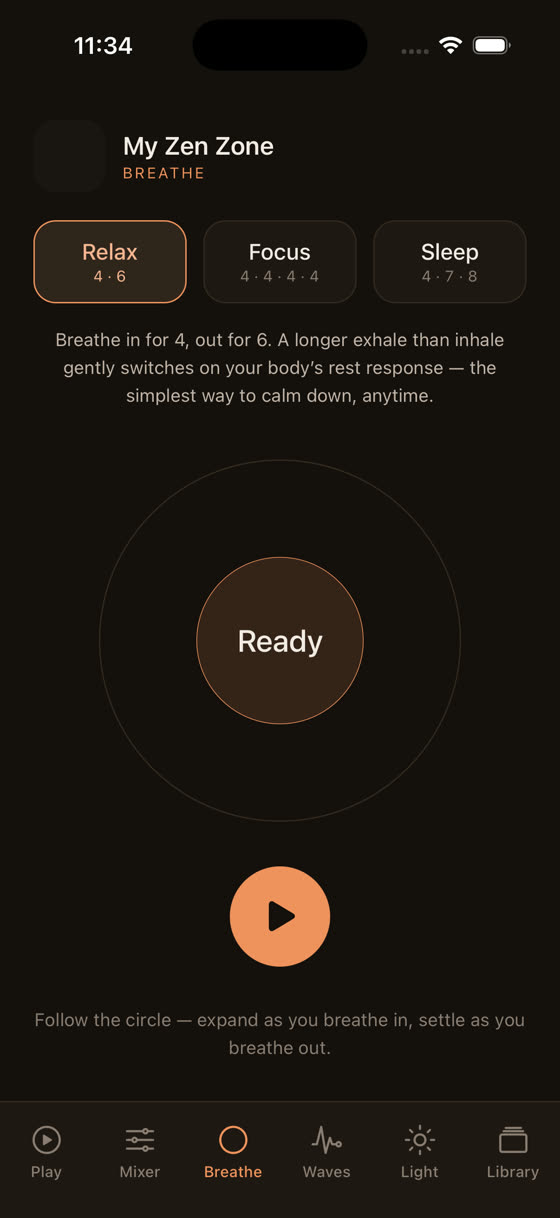
Our breathing screen uses a 4-6 pattern, four counts in, six counts out, specifically because that ratio favours the exhale side of the nervous system, the part responsible for calming rather than alerting. It's a useful tool in exactly this moment, when you're trying to tell the difference between hunger and restlessness.
How the music and guided sessions fit into this
One thing we built the app around, because nearly every other meditation app does it differently, is that our guided sessions play over the music rather than replacing it. The voice sits as its own layer, with the music and any nature sound underneath still audible and adjustable, so the composition doesn't stop and restart awkwardly when the guidance ends. You can hear exactly how that works here:
This matters for the appetite question specifically because tempo and instrumentation set the physiological backdrop the voice is working against. A session built on a slow, unresolved pad at 55-60 bpm nudges you toward the parasympathetic state faster than a session with a busier arrangement, which means the digestive and hunger-awareness effects described above show up more reliably when the music underneath is doing its job. If you want to notice your body's actual signals rather than override them with stimulation, the quietest possible musical bed helps.
The mixer lets you build that bed yourself rather than accepting a fixed track. Three nature sounds, each with an independent level, sitting under whatever score or guided session you've chosen:
If focus rather than appetite is the thing you're trying to manage with meditation, the same autonomic logic applies in reverse, and our piece on music for focus and study covers how a slightly faster, more rhythmic bed keeps you alert instead of winding you down. Appetite and focus sit on opposite ends of the same nervous-system dial.
The honest summary
Meditation doesn't manufacture hunger out of nowhere. It changes how much of your body's existing signal reaches your attention, and it genuinely shifts blood flow and vagal tone toward digestion when it's working as intended. Both effects are real, modest, and nothing to be concerned about. What's worth paying attention to is which kind of "hungry" you're feeling once the sit ends, because that distinction, more than the meditation itself, is what decides whether you eat well or just eat. The whole library, including the breathing and guided sessions mentioned here, is available through the app, or you can see the current set up at /get.
Common questions
Should I meditate before or after eating?
Either works, but they do different things. Before a meal, a short sit can help you tell real hunger from habit or stress, so you eat a more appropriate amount. Right after a large meal, it can accentuate the sluggish, digestive feeling some people dislike. There's no fixed rule, just notice which timing suits your body.
Can meditation help with stress eating specifically?
It can help you notice the urge before acting on it, which is often enough to interrupt the automatic reach for food. It won't remove the urge entirely on its own. Pairing a short breathing exercise with a minute of sitting with the craving, rather than immediately eating, is the most evidence-backed version of this approach.
Is it normal to feel hungry during meditation, not just after?
Yes, especially in longer sits or ones done on an empty stomach. As the mind quiets, background body signals including hunger become more noticeable because there's less mental noise competing for attention. It's not a sign you're doing it wrong, it's usually just your attention finally reaching a signal that was already there.
Does the type of meditation matter for this effect?
Body-scan and breath-focused practices tend to surface hunger awareness most directly, because they train attention toward physical sensation. Visualisation or mantra-based styles are less likely to bring hunger to the surface, since attention stays higher up, away from bodily signals.