No, music does not cause sleep paralysis. There is no recorded case, no mechanism, and no plausible chain of events where a song triggers the condition on its own. What music can do is disrupt the sleep patterns that make sleep paralysis more likely, and that distinction matters a lot if you're lying awake at 2am trying to figure out why it happened to you.
Sleep paralysis is a glitch in sleep architecture, not a response to sound. But the habits around how and when you listen to music, especially right before bed, can tip the odds. Let's go through the actual mechanism first, because almost every article on this topic skips it.
What sleep paralysis actually is
During REM sleep your brain deliberately switches off voluntary muscle control. It's called atonia, and it exists so you don't physically act out your dreams. Normally this switch flips off cleanly when you wake up. Sleep paralysis happens when it doesn't: your mind surfaces to consciousness while the body is still locked in REM atonia. You're awake, aware of the room, and unable to move for anywhere from a few seconds to a couple of minutes. Many people also report pressure on the chest or a sense of presence in the room, which comes from the brain still running dream-like processing while your eyes are open.
It's unpleasant but not dangerous, and it resolves on its own. The known risk factors are well documented: irregular sleep schedules, sleep deprivation, sleeping on your back, high stress, and conditions like narcolepsy. Genetics play a role too. Nowhere on that list is a genre of music, a frequency, or a specific song, no matter what a forum thread claims.
So where does music actually fit in
The honest answer is: indirectly, through timing and arousal, not through sound itself. If you fall asleep with music playing and it cuts out abruptly, or a playlist jumps to something loud and jarring, you can be startled out of deep or REM sleep in a way that's more abrupt than a natural wake-up. Abrupt, poorly timed awakenings are exactly the kind of disruption associated with sleep paralysis episodes. It's the disruption that matters, not the music.
The same goes for using music as a substitute for actually winding down. Falling asleep with earbuds in, phone brightness still on, scrolling between tracks, pushes bedtime later and fragments the first sleep cycle, which is already a known risk factor independent of any music at all.
Where the genre myths come from
Search this topic and you'll find claims that certain frequencies, binaural beats, or “demonic” tempos induce sleep paralysis. None of this holds up. What's really happening is correlation dressed up as causation: people who already have irregular sleep, high anxiety, or late-night screen habits are also more likely to fall asleep with music or video playing. The music gets blamed because it was present, not because it did anything.
There's also a reporting bias worth naming. Sleep paralysis episodes are vivid and frightening, so people remember exactly what was playing when it happened and retroactively treat it as a cause. It's the same logic that blames a specific pillow or a specific side of the bed. The actual variable is almost always sleep timing or stress.
What might genuinely help or hurt
Volume and abruptness matter more than genre. A sudden loud noise, music or otherwise, mid-REM is more likely to produce a jarring, disoriented wake-up than a track that fades out gently. Tempo matters less for sleep paralysis specifically and more for how easily you fall asleep in the first place: music at 60-70 bpm, close to a resting heart rate, tends to support the slowdown in breathing and heart rate that precedes sleep, while anything faster or with sharp dynamic changes keeps the nervous system a notch too alert.
Stimulant-heavy evenings, loud music late at night, high-energy playlists close to bedtime, push sleep onset later and can shorten total sleep time, both of which are established risk factors for sleep paralysis. If you want more detail on which tempos and instruments actually help the body wind down, we've written about it at length in best music for sleep.
A fade-out matters more than people think
One detail that gets overlooked: how your music session ends. A playlist that stops dead, or a streaming app that drops to silence mid-track because of a connection issue, is a small but real disruption at a vulnerable point in the night. This is one reason a built-in sleep timer that fades volume down gradually, rather than cutting off, is worth using instead of leaving a general playlist running indefinitely.
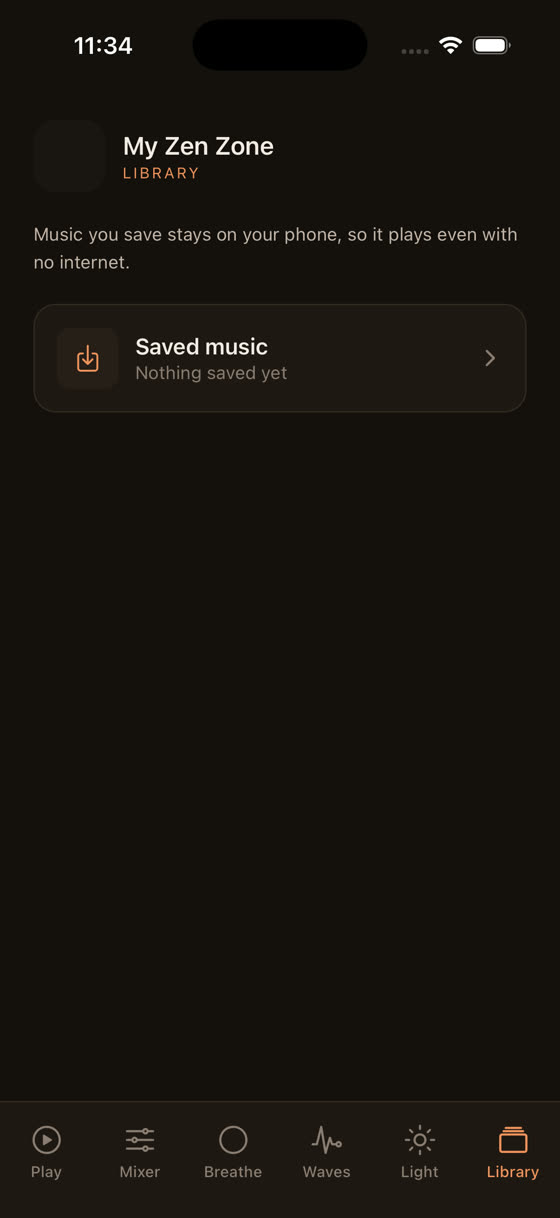
Pairing a slow fade with a dimming light screen in the minutes before you actually close your eyes gives your nervous system a clear, consistent signal that the day is ending, rather than an abrupt audio stop that can nudge you toward a lighter, more easily disrupted stage of sleep.
Background sound versus a random playlist
A lot of people reach for music at bedtime because silence feels too loud, especially in a quiet flat or a house with creaky pipes. The problem is that a generic playlist wasn't built for this. It has dynamic swings, key changes, the occasional upbeat track that sneaks in. None of that causes sleep paralysis directly, but it keeps the brain doing more processing than a flat, steady bed of sound would.
This is the difference a proper mixer makes. Instead of one track doing all the work, you can blend rain at a low level under a steady drone, with no melody or key changes to track, and nothing that spikes in volume. The three layers sit under the threshold where your brain has to pay attention to them, which is the entire point of sleep sound.
Building a wind-down that actually reduces the real risk factors
Since the real drivers of sleep paralysis are irregular schedules, poor sleep quality, and stress, the most useful thing music can do is address those directly rather than just provide a soundtrack. A short breathing pattern before you put the phone down does more for the nervous system than any genre choice.
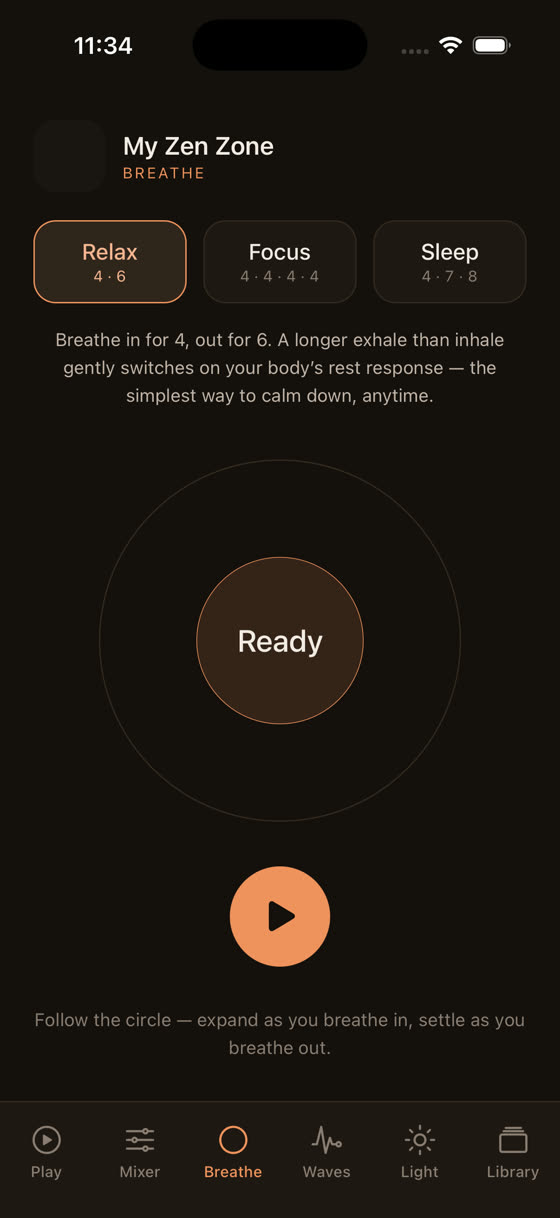
A few minutes on a 4-6 pattern, four counts in, six counts out, slows the heart rate in a way that's measurable and makes the transition into sleep less abrupt, which is exactly the kind of consistency that lowers risk over time. Combine that with a consistent bedtime, a dimmed room, and a slow fade-out rather than a hard stop, and you're addressing the actual causes rather than chasing a myth about frequencies.
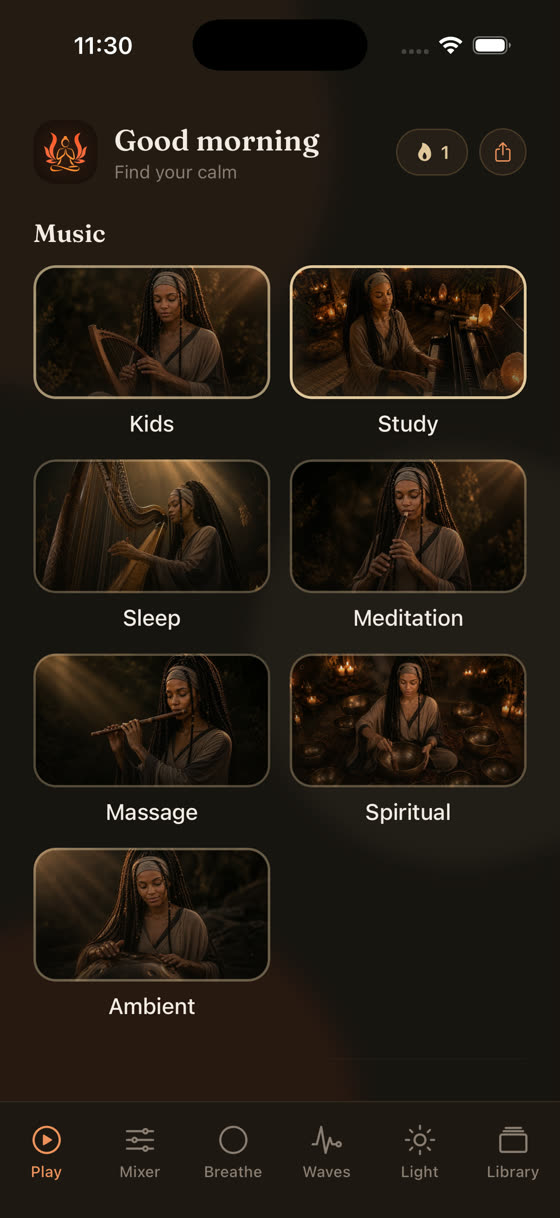
If you're building this into a routine, it helps to have sleep, calm, and focus material organised separately rather than hunting through one undifferentiated playlist, so the track you reach for at 11pm is actually built for that hour rather than borrowed from a workout list.
What to actually do tonight
Keep the volume low and steady rather than on shuffle through a mixed playlist. Use a timer that fades out instead of stopping abruptly. Go to bed at a consistent time rather than whenever the album ends. And if you do wake up mid-episode, don't fight it; slow, deliberate breathing and trying to move a single finger or your tongue first, rather than your whole body, tends to shorten the episode. None of this is about avoiding music. It's about using it with a bit more intention than most playlists are built for, which is really the whole premise behind an app like My Zen Zone, with new tracks added every two weeks so the material stays built for sleep rather than repurposed from somewhere else. You can see the full library at /get.
Common questions
Can sleep paralysis be caused by headphones specifically?
Not directly. Headphones themselves don't cause it, but sleeping in them can mean an abrupt stop or a sudden loud sound if a notification comes through, which can produce a jarring wake-up. If you wear them to sleep, keep volume low and use a timer that fades out rather than cutting off.
Does ASMR or binaural beats cause sleep paralysis?
There's no evidence either one causes it. Binaural beats claims about brainwave entrainment are often overstated, and ASMR is simply a relaxation response for people who experience it. Neither has a documented link to REM atonia timing, which is what actually produces sleep paralysis.
Is it safe to fall asleep listening to music every night?
Yes, for most people, as long as volume stays low and the session ends gently rather than abruptly. The bigger concern is using a bright phone screen to manage playlists right before bed, which delays sleep onset more than the music itself affects anything.
Why did sleep paralysis happen right after I woke up to loud music?
A sudden loud sound can wake you abruptly from REM sleep before the muscle paralysis of that stage has switched off, which is exactly the mismatch that causes an episode. It's the abruptness, not the music, that's the trigger, which is why a gradual fade-out is worth using instead.
Should I stop using music for sleep if I've had an episode?
No need to stop, but it's worth reviewing how the session ends and how loud it is. Switch to a steady, low-level soundscape rather than a dynamic playlist, use a fade-out timer, and focus on a consistent bedtime, since irregular sleep is the stronger risk factor by far.