The best meditation music on Apple Music is built around a drone or sustained pad, sits at roughly 60-70 bpm, and has no percussion to track. Search by instrument instead of the word 'meditation' — try 'solo cello drone', 'sustained pad ambient', or 'Tibetan bowl ambient' — because the word itself mostly surfaces compilation albums padded with library filler. That gets you closer. But Apple Music was built to play albums end to end, not to let you shape a twenty-minute sit the way a dedicated library can, and that gap matters more than people think.
What Actually Makes Music Work for Meditation
Most tracks fail not because they're bad music but because they were written to be listened to, not sat with. A pop ballad at low volume is still a pop ballad: it has a verse, a lift, a hook you half-expect. Your attention keeps a tiny thread of anticipation running even when you're trying to let go of thought. Meditation music works differently. It removes the thing your brain predicts next. No chorus, no key change, no build. A sustained pad or a bowed drone just sits in one harmonic space and stays there, which gives your attention nothing to chase and nowhere to go but back to your breath.
Tempo matters too, and 60-70 bpm isn't arbitrary — it's roughly a resting heart rate, and music at that pace doesn't pull your pulse up the way a 100+ bpm track quietly does. Percussion is the other giveaway. Even a soft shaker or a brushed cymbal gives your brain a beat to count, and counting is the opposite of what you're after in a sit.
Why Apple Music's Search Works Against You
Apple Music is a catalog built for albums and singles, and its search and recommendation engine rewards what gets streamed most, not what's best suited to twenty minutes of stillness. Type 'meditation music' and you'll get a wall of near-identical compilation albums, often the same stock recordings re-licensed under forty different titles, with tracks cut to 3-4 minutes and looped with an audible seam. Ads for new releases can interrupt a sit if you're not on a paid plan. There's no way to layer a second sound under the track, no way to lower just the melody and keep a drone running, and no sleep timer built for this specific use. You get a track. You don't get a session.
The Instrumentation That Actually Helps
Once you filter past the filler, look for specific textures: bowed strings held as a drone rather than played as a melody, slow sine pads, Tibetan or crystal bowls struck sparingly and left to ring out, soft mallet instruments like vibraphone used for single sustained notes rather than runs. Avoid anything with a bright top end — harsh treble pulls attention upward and out of the body, which is the opposite of the point. The best meditation recordings also avoid octave jumps and sudden dynamic swells; everything stays in a narrow, predictable range so your nervous system can stop bracing for change.
Guided Meditation Changes the Equation Entirely
Most apps, and most guided tracks you'll find anywhere including Apple Music, handle voice and music the same crude way: either the music stops while someone talks, or the voice is baked into a fixed stereo mix you can't touch. If the narrator's pace doesn't match yours, or the music underneath is too loud or too quiet, you're stuck with it.
Watch a guided session play with the voice as its own layer over the music, each with an independent level you can raise or lower mid-session, and you'll see why this matters: you can fade the voice to nothing in the final minutes and stay with just the music, or bring a nature layer up underneath both without any of it stopping to switch tracks.
Building a Session Instead of Picking a Track
The other thing a single Apple Music track can't do is let you build. A lot of real-world meditation isn't one pure sound, it's a blend: a soft drone, a thread of rain, maybe a low brainwave tone underneath, each at a level that suits you and not someone else's preset mix.
That clip shows three sounds moving independently in real time, which is the actual difference worth naming: most libraries, Apple Music included, hand you a fixed track. A mixer with a separate level per sound means you're not stuck with whatever balance the composer happened to print.
Brainwave Tones and Being Honest About the Evidence
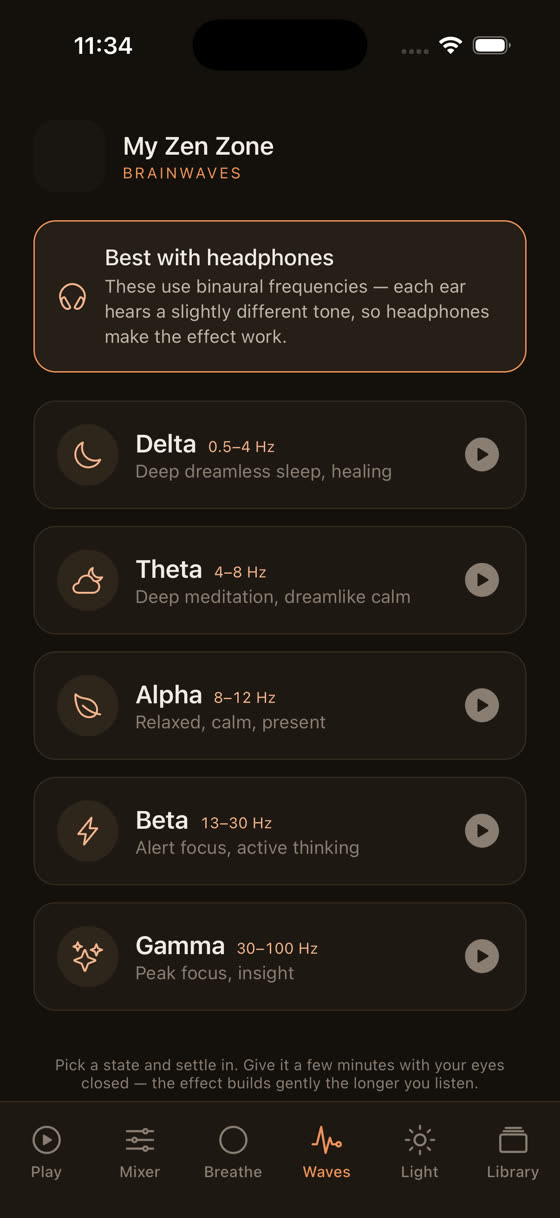
Binaural and isochronic tones get mentioned a lot in meditation circles, usually with claims that outrun the research. The honest answer is that evidence for specific effects on brainwave states is thin and mixed, and nobody should promise you a particular outcome from listening. What they do reliably offer is a low, steady layer that some people find helps them settle, the same way a fan or white noise does for others. Worth trying as one option among several, not worth betting a whole practice on.
Practical Setup for Tonight
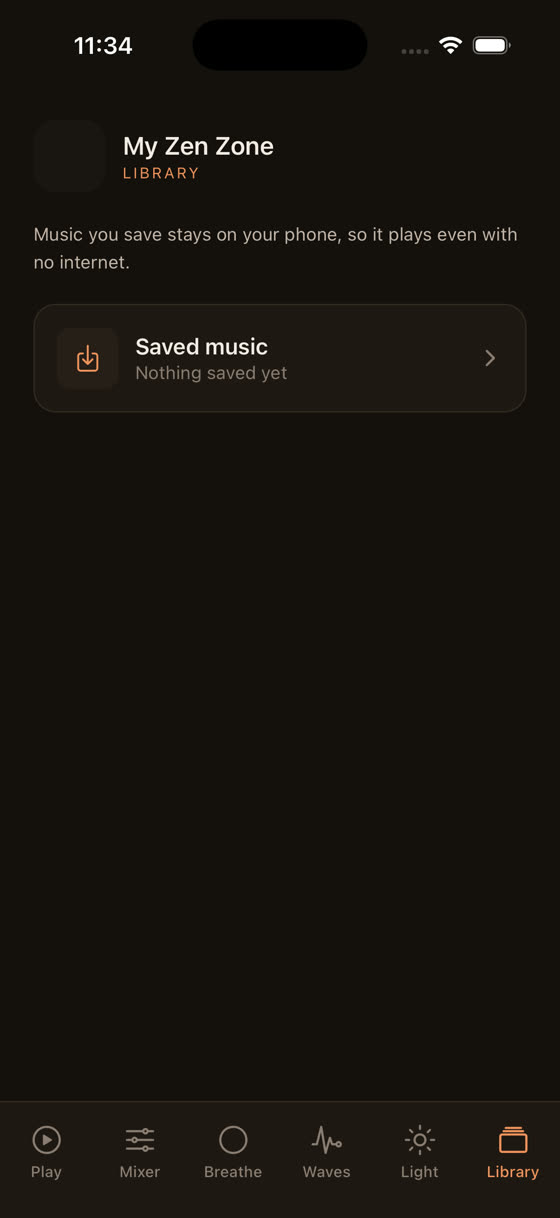
If you're sitting down for a meditation session right now, a few small things matter more than which track you pick. Use a sleep timer so the music fades out rather than cutting off mid-breath if you drift. Download whatever you're using so a dropped signal doesn't interrupt the one block of quiet you carved out of the day. If you meditate in the evening to wind down rather than to focus, pairing the sound with something visual — a slow dimming light rather than a bright phone screen — makes the transition into actual sleep smoother, which is covered in more detail in our piece on music for sleep.
If your meditation practice is really about sharpening attention for work rather than winding down, the instrumentation you want shifts slightly — steadier, less drone, a touch more rhythmic structure — and that's covered separately in our guide to focus music.
Apple Music vs a Library Built for This
Apple Music is a fine place to find a single good drone track. It's not built to be a meditation tool, because it wasn't designed around sits, sessions, or the specific physiology of slowing down. A library composed specifically for this — with hundreds of original tracks, a mixer with independent levels, guided sessions layered rather than baked in, and new music added every two weeks rather than a static playlist — does more of the actual work for you. You can try the whole thing at myzenzone.app or go straight to the download if you'd rather just sit with it tonight than keep scrolling search results.
Common questions
Is meditation music better than silence?
Neither is objectively better; it depends on you. Some people find silence lets intrusive thoughts get louder, and a steady drone gives attention something gentle to rest on instead. Others find any sound distracting. Try both for a week each and notice which one actually helps you stay seated longer without reaching for your phone.
How long should a meditation music track be?
Long enough that you're not watching the clock for the next track change, which usually means at least 10-15 minutes, ideally 20-40 for a full sit. Short 3-4 minute tracks, common in Apple Music compilations, often loop awkwardly or cut off mid-phrase right when you've settled in.
Do binaural beats actually work for meditation?
The research is thin and results are mixed, so treat any strong claim with suspicion. Some people find a low steady tone helps them settle, similar to how background noise works for others. It's reasonable to try as one option, but it shouldn't be the reason you choose a session over simply sitting with a drone or silence.
Can I use guided meditations and music at the same time without them clashing?
Yes, if the app layers them separately rather than baking the voice into the music track. That lets you lower the narration and keep the music, or fade the voice out entirely toward the end of a session, instead of being stuck with whatever balance someone else decided on.